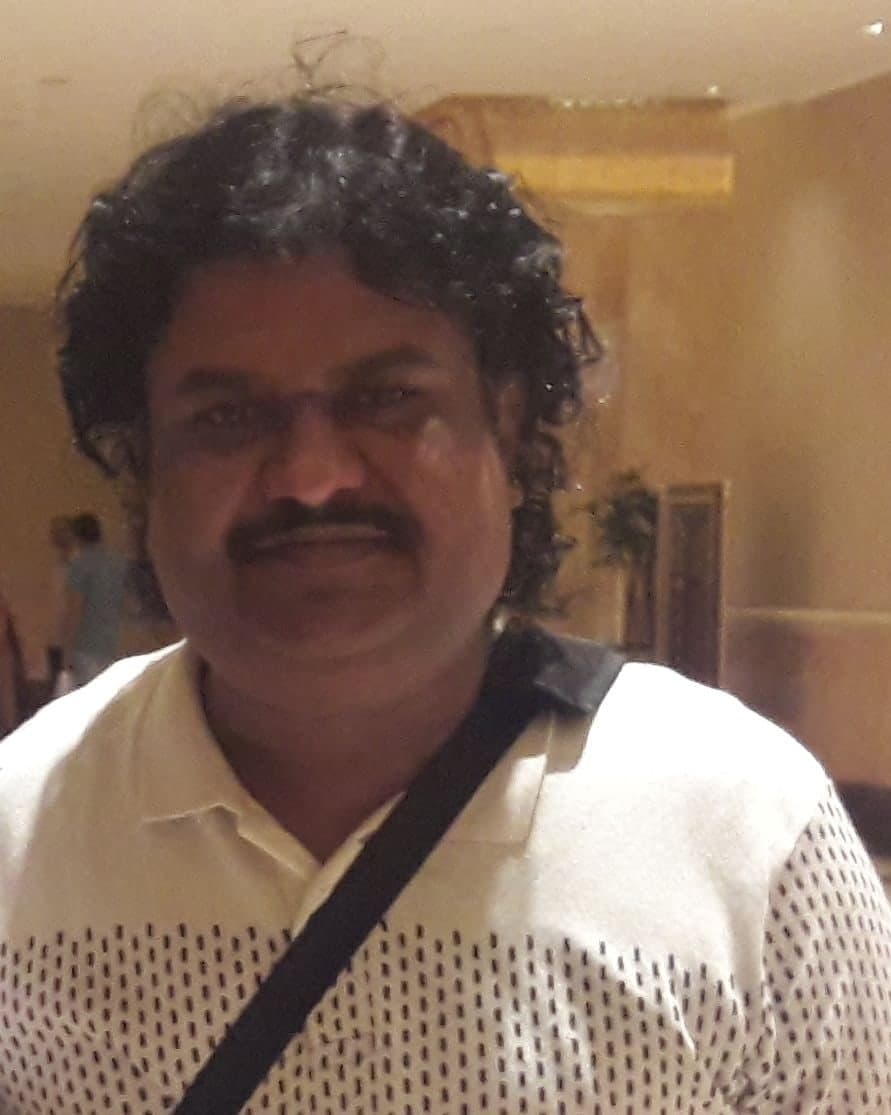
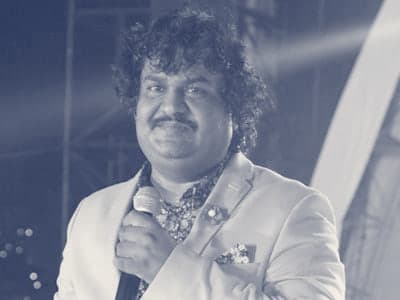
Osman Mir was born on 22 May 1974 in Vayor, a village in Gujarat’s Kutch district, into a family of musicians. His father, Husenbhai Mir, played tabla for bhajan and santvani, the devotional song gatherings of Gujarat that often run through the night, and his son learned rhythm before he learned melody.
By thirteen Osman was on stage beside his father, keeping taal for other singers. He studied up to Class 9 at Bhulabhai Mansinh Vidyalay in Layja; after that, music was his school.
His first professional work was as a tabla accompanist, and his official biography singles out one name: the celebrated bhajanik Narayan Swami, with whom he began his career. A Mumbai Samachar profile puts that apprenticeship at about ten years. Accompanying a singer of that stature is an education in phrasing, and in how a song holds an audience.
The voice kept calling. He learned the basics of singing from his father and was later trained formally by his guru, Ismail Datar of Mandvi.
The turn came on Gurupurnima at Talgajarda, the ashram of the Ram Katha exponent Morari Bapu. Osman had come to play tabla at the evening’s concert. There, Parthivbhai introduced him to Bapu with praise for his voice, and he was asked to sing. His first offering to that audience was “Dil Kash Tera Naksha Hai”.
It was the start of an association that has lasted decades. His official biography describes him as an indispensable part of Morari Bapu’s Ram Katha gatherings, where Bapu sets aside an evening for him wherever he can. His debut concert as a singer followed in Ahmedabad, organised by Pradip Dave.
Over the following decades he built an unusually wide repertoire. There are ghazals in the line of the four singers he calls his ideals, Nusrat Fateh Ali Khan, Mehdi Hassan, Jagjit Singh and Ghulam Ali, along with Sufi kalaam and qawwali. There are Kabir and Meera bhajans, sugam sangeet, Gujarati folk song and the long, conversational evenings of lok dayro. His official biography counts thousands of public performances.
Several of the most-watched uploads on his official YouTube channel come from this world: the Shiva bhajan “Kailash Ke Nivasi” recorded at Talgajarda, his renditions of “Mujhe Tum Yaad Aate Ho” and “Hai Zindagi Kitni Khubsurat”, and Kabir’s “Man Lago Mero Yaar Fakiri Mein”. Watch the official videos.
Born into a Muslim family, he has spent much of his career singing Ram, Krishna and Shiva bhajans at temples and ashrams alongside Sufi and ghazal evenings. His official biography calls him an “Upanishad of Secularism”, and he has said that his 2024 Ram bhajan carries Kutch’s unbroken communal harmony.
In 2013 Sanjay Leela Bhansali brought Osman Mir to Hindi cinema. According to Osman Mir’s official biography, Bhansali had carried the Gujarati song “Mor Bani Thanghat Kare” in his head for years, since hearing it in the voice of the folk legend Hemu Gadhavi. He heard Osman on YouTube and called him to Mumbai without an audition, and the song was recorded in two takes.
The song opens Goliyon Ki Raasleela Ram-Leela over the title credits, sung by Osman Mir with Aditi Paul, and he also sings with Shreya Ghoshal on the film’s garba “Nagada Sang Dhol”. Eros Music released the soundtrack on 4 October 2013. Its words come from Jhaverchand Meghani’s 1944 Gujarati rendering of Rabindranath Tagore’s “Navavarsha”. After a public debate over credit, Bhansali Productions confirmed that Meghani would be credited in the film’s opening titles, with his photograph.
The song earned him a nomination for Best Music Debut at the 2014 GiMA Awards (the award went to Ankit Tiwari). It also gave him the song audiences ask for first, wherever he sings.
He was already a playback voice in Gujarati cinema, where his official filmography begins with Premi Jhukya Nathi Ne Jhukshe Nahi (2011), and after Ram-Leela the work multiplied: Passport, Lavari and Always Rahishu Sathe (2016), Carry On Kesar (2017), Back Bencher and Mari Life Tari (2018), and Hungama House, Rakhewal and Mister Kalaakar (2019), for which he also wrote and composed. In Hindi he sang for Bezubaan Ishq (2015) and for Turning Point and Yeh Kaisa Tigdam (both listed for 2018). His official biography counts nearly 58 Gujarati films in all. The full list is on the music page.
The concert calendar went global. His official tour log records Ram Katha evenings with Morari Bapu in Athens and Abu Dhabi (2016), concerts in Charlotte and New Brunswick (2016), the AAHOA convention in San Antonio (2017), De Montfort Hall in Leicester and the Watford Colosseum (2017), Brampton’s Rose Theatre (2017), Bangkok (2017), Sydney (2018), Toronto (2019) and a Diwali-season run through Dallas, Atlanta and Los Angeles (2019). See the full live history.
Along the way came collaborations: a live album with Sangeeta Labadiya (2014), the album Teri Khushboo, launched in Mumbai in May 2017, and a first video song with Kirtidan Gadhvi (2018).
On 1 April 2020 the composer Amit Trivedi released “Moti Veraana”, the first song of his Songs of Faith album, featuring Osman Mir: a Navratri song welcoming the goddess Ambe. Six weeks later, “Bedardi Tere Pyar Ne” became the first song Osman recorded with his son, Aamir Mir.
More collaborations followed: “Haji Peer” with Salim–Sulaiman (2020) and a second Navratri song with Amit Trivedi, “Maari Maavadi” (2023), sung with Aamir. In Hindi cinema he returned for the garba “Boom Padi” in Maja Ma (2022, with Shreya Ghoshal), and in 2024 for two songs in Maharaj: “Achutam Keshavam” with Sonu Nigam and “Holi Ke Rang Ma” with Shreya Ghoshal and Shaan.
In September 2023 one of his songs was featured at the G20 Leaders’ Summit gala dinner hosted by President Droupadi Murmu in New Delhi, and he thanked Prime Minister Narendra Modi for selecting it. In January 2024 he released “Shri Ramji Padhare”, a Ram bhajan he wrote and composed himself, and the Prime Minister shared it ahead of the consecration of the Ram temple in Ayodhya.
The older songs have stayed in public memory too. “Mor Bani Thanghat Kare” is still the song crowds ask for: in 2018 Divya Bhaskar reported that when he began it at a dayro in Mumbai, the audience showered the stage with bundles of notes.
On 6 March 2024, at Vigyan Bhawan in New Delhi, President Droupadi Murmu presented Osman Mir the Sangeet Natak Akademi Award for the year 2022, in the category of Creative & Experimental Music. The Akademi is India’s national academy for music, dance and drama, and its awards are among the country’s highest recognitions for practising artists.
It crowned a long list of honours that begins with the Kutch Shakti Kala Ratna in 2002 and includes the Gujarat State Sangeet Natak Akademi’s Gujarat Gaurav Puraskar (2017). The full list of awards and nominations, with sources, is on the honours page.
Since 2020 Aamir Mir has moved from the wings to the centre of the stage. Father and son now share the bill on almost every date in the official calendar: Wembley (2022), Nairobi (2023), London’s Royal Festival Hall (May 2025), a Canadian run through Brampton, London (Ontario) and Hamilton (2025), and UK and Ireland dates in Manchester and Dublin in September 2026. In India they joined the third-anniversary celebrations of the Nita Mukesh Ambani Cultural Centre in Mumbai in April 2026, and in August 2026 they sang Gujarati music with a symphony orchestra in “Symphony of Gujarat”, alongside Kavi Pau, whose Third Culture Collective has released three recordings with Osman Mir since October 2025. In January 2026 Aamir received the Kavi Ravji Patel Award for young musical talent from Morari Bapu.
The recording studio is busy too. Under the Osman Mir Production House banner, the official channel has released the ghazal “Kaisa Manzar” (May 2026) and a new version of his 25-year-old composition “Katari Kalje Vagi”, a Vinod Manek ghazal in Raag Charukeshi sung by Shreya Ghoshal and Aamir Mir (July 2026). It has also released the Navratri garba “Rumjum Aavjo” with Aamir Mir and Salim Merchant (September 2026) and the Hindi ghazal “Meri Dastaan” (27 September 2026). On screen, his newest film song is “Mehar Karo” in the Gujarati film Chatni, released on 18 September 2026. Watch the latest releases.